UNESCO Chair
Field Visit to Tobago: Understanding Climate Change Through Local Perspectives
27 June 2026

Photo: B. Ratter
Field Visit to Tobago: Understanding Climate Change Through Local Perspectives
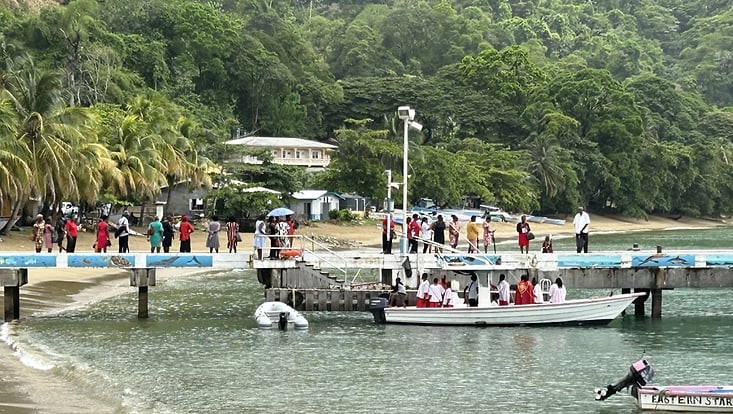
Prof. Dr. Beate Ratter recently visited North-East Tobago UNESCO Biosphere Reserve as part of ongoing work of the UNESCO Chair on Societal Climate Change Research and Resilience.
The visit focused on finding local answers to the question of whether climate change effects are a serious problem for the people of Tobago and what political and everyday strategies are being pursued to meet these challenges. Meetings were held with representatives from government authorities, local actors and lay people of Charlottesville and other parts across the 15 rural communities, from Belle Garden in the east to Moriah in the north. Alongside the official appointments, it was particularly interesting to talk to fishermen, farmers, environmental NGO representatives, entrepreneurs, and nature lovers and to explore their concerns and understanding of climate change and its effects. At the same time, the visit included on-site observation of Tobago’s unique natural environments, highlighting the close relationship between ecosystems, livelihoods, and community resilience.
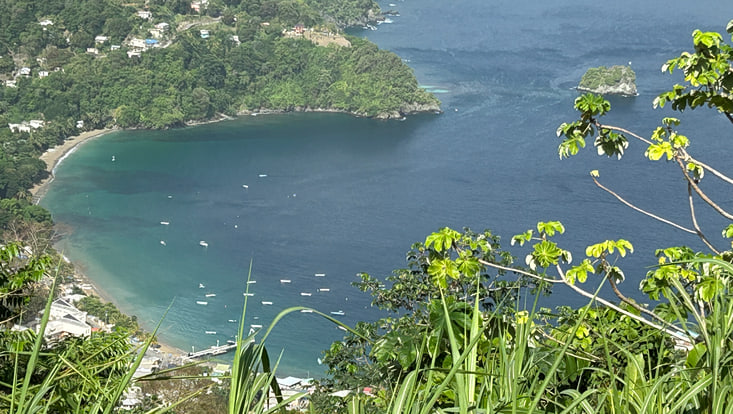
While climate change does not seem to be at the centre of the concerns, there are certainly challenges posed by a threatened environment, from sargassum blooms, coastal erosion, and changing precipitation patterns to flooded coastal roads.
One goal of the stay was to find another example for our collection of “traveling ideas” on Tobago as well — good practices and locally rooted solutions that can be transferred, adapted, and shared with other island and coastal communities facing similar climate challenges. Through dialogue with institutions and local actors, the visit emphasized the value of mutual learning and cross-regional knowledge exchange as a key element of building climate resilience in UNESCO Biosphere Reserves and beyond.
The idea of climate champions was particularly inspiring. These were people “from the neighbourhood” who were trained to spread the news about climate change and its effects in local everyday life. It was interesting to meet several of these former climate champions—even though some of them had long since moved on from their former roles. The idea of the climate champion is in danger of fading and being forgotten, which would be a great pity.
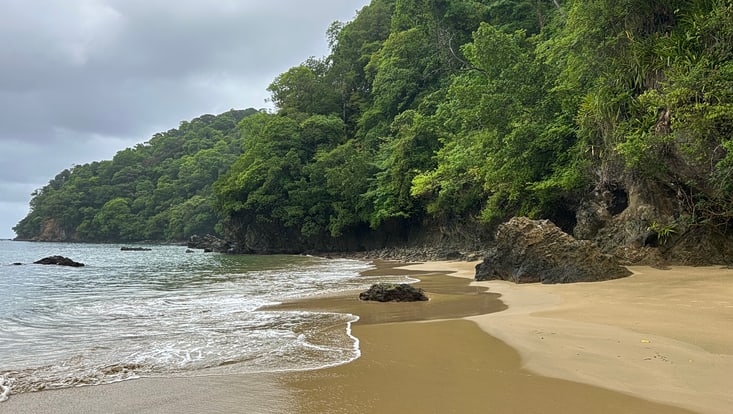
Many thanks to everyone I had the opportunity to speak with for the warm and positive encounters on Tobago! A special thanks goes to ERIC (Environmental Research Institute Charlotteville) and the activists who are so highly committed to implementing North-East Tobago as a UNESCO Man and the Biosphere (MaB) Reserve.